Category: Uncategorized

  • EDiHTA Open Call webinar: recording and slides available

    EDiHTA Open Call webinar: recording and slides available

    EDiHTA Open Call webinar: recording and slides available

    The EDiHTA team successfully held its webinar on 12 March 2026, presenting the EDiHTA Open Call for digital health technology developers and manufacturers. The session introduced the objectives of the Open Call and provided guidance on the application and piloting process, followed by a live Q&A with participants.

    If you were unable to attend, the webinar recording and presentation slides are now available.

    DHT developers and manufacturers interested in validating their technology within the first pan-European Digital Health Technology Assessment framework are encouraged to apply to the Open Call.

    Application deadline: 20 March 2026, 16:00 CEST

    Access the recording, slides, and application documents on the EDiHTA Open Call page:

  • Bridging Policy to Practice: What comes next for HTA, EHDS and Digital Health in Europe?

    Bridging Policy to Practice: What comes next for HTA, EHDS and Digital Health in Europe?

    Bridging Policy to Practice: What comes next for HTA, EHDS and Digital Health in Europe?

    With the EU Health Technology Assessment Regulation (HTAR) now in its implementation phase and the European Health Data Space (EHDS) Regulation formally adopted and entering its transition phase, attention is rapidly shifting from legislative ambition to practical implementation. While the HTAR focuses on assessing at the EU level the clinical aspects of new health technologies, the EHDS aims to transform how data for those assessments will be accessed and used. Together, these initiatives signal a fundamental recalibration of how Europe evaluates, adopts and monitors health technologies. Yet their real impact will depend on how effectively Member States, regulators, industry, policymakers, patients and the other end-users translate this framework into day-to-day practice.

    On 13 January, one year after the start of the implementation phase of the HTAR, the European Patients’ Forum hosted a webinar to showcase the work carried out in 2025 to ensure meaningful patient involvement from the very start of implementation. The EU-funded European Digital Health Technology Assessment (EDiHTA) project was also featured, showcasing how it actively integrates patient perspectives into its framework, with a strong emphasis on relevance, fairness, and accessibility for patients.

    The webinar highlighted several key messages from speakers representing patient organisations, individual patient advocates, and the European Commission:

    • Patient involvement in the HTAR process was achieved gradually, through the persistent efforts of patient organisations, which, through concrete cases and practical examples, clearly demonstrated the added value of their engagement.
    • Patient involvement is essential to ensure that the HTAR meets its objectives and responds to patients’ needs, notably improving access to treatments across Europe and supporting greater harmonisation of HTA among EU Member States.
    • Patients and patient organisations play a crucial role in the HTAR process, as they are best positioned to provide real-world insights into what works in practice under this new EU framework and to highlight areas where improvements can still be made.
    • Further steps must be considered, including tackling language barriers, ensuring that patients and patient organisations are appropriately involved, clarifying rules on conflicts of interest, and strengthening training opportunities. These efforts are needed not only to support meaningful patient involvement, but also to ensure that HTAR and HTA are better understood by a wider range of patients and that participation does not rely on the same individuals.

    Reflecting on progress over the past year, following the start of the implementation phase for the HTAR and as EHDS moves through its transitional phase, significant strides have been made, yet careful attention is needed as the EU moves from legislative groundwork to operational implementation.

    Within this evolving landscape, EDiHTA sits at the intersection of the HTA Regulation and the EHDS, aiming to establish a dedicated framework for evaluating digital health technologies, one of the most complex frontiers in health technology assessment. The dynamic, iterative development of digital health technologies, their reliance on real-world performance, and their frequent updates present challenges that traditional HTA methodologies are not well equipped to address.

    In response to these challenges, EDiHTA illustrates how tailored methodologies for digital health technologies can bridge this gap between rapid technological evolution and rigorous assessment standards. Success will require continuous collaboration among key stakeholders, a commitment to learning from early implementation experiences, and ensuring that digital health technologies are evaluated in ways that truly enhance patient access and outcomes across Europe.


    This article was prepared by our partners from European Patients’ Forum.
  • Webinar: EDiHTA Open Call for DHT Developers/Manufacturers

    Webinar: EDiHTA Open Call for DHT Developers/Manufacturers

    Webinar: EDiHTA Open Call for DHT Developers/Manufacturers

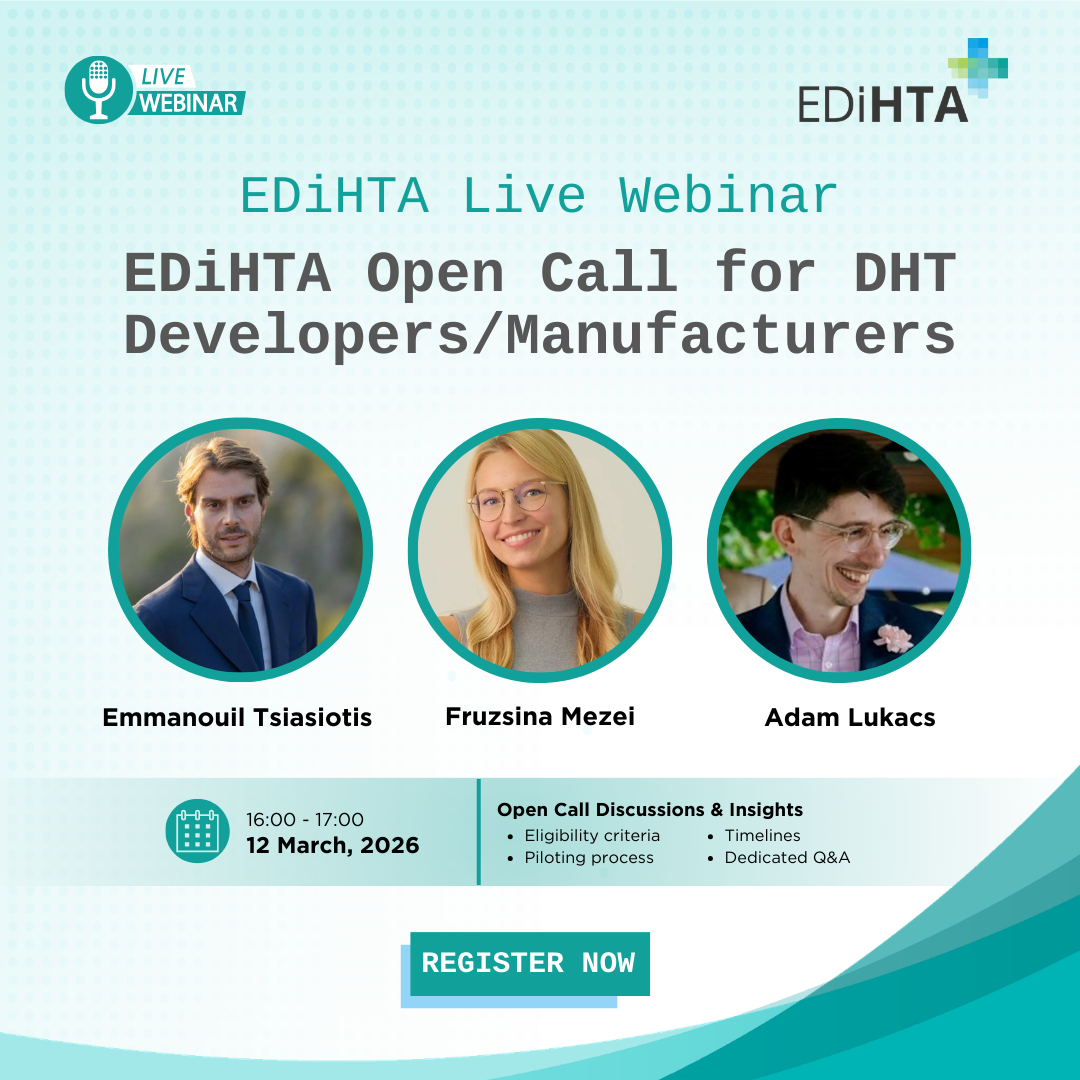
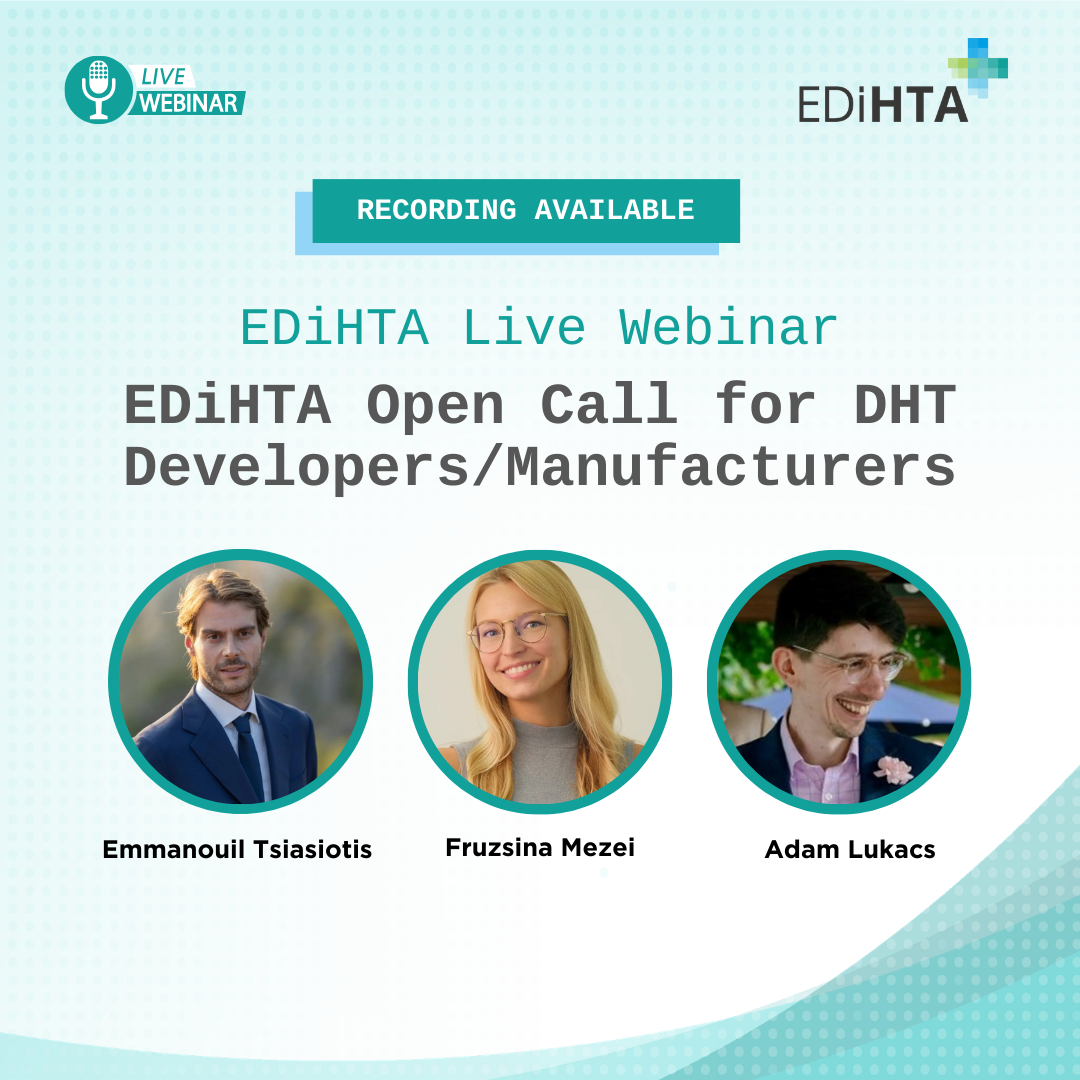
    The EDiHTA consortium invites digital health technology (DHT) developers and manufacturers to join an upcoming webinar dedicated to the EDiHTA Open Call, currently open for applications. This session will provide detailed information about the Open Call, including eligibility criteria, timelines, and the piloting process and will offer participants the opportunity to ask questions directly to the EDiHTA team.

    Agenda (60 minutes)

    5 min – Introduction to EDiHTA and the Open Call

    20 min – Presentation of the Open Call: objectives, eligibility, selection process and pilot structure

    35 min – Live Q&A session

    Participants will have the opportunity to clarify application requirements and better understand how their DHT could be assessed within the first pan-European Digital Health Technology Assessment framework. Any remaining questions following the webinar can be addressed directly to the consortium via email info@edihta-project.eu.

    Speakers

    • Emmanouil Tsiasiotis, EDiHTA Project Manager (UCSC)
    • Fruzsina Mezei, Health Economist & Health Policy Expert (UCSC)
    • Adam Lukacs, Senior Manager New Opportunities (EIT Health)

    About the Open Call

    EDiHTA has launched an Open Call for DHT developers/manufacturers to validate the first pan-European Digital Health Technology Assessment framework. Two DHT use cases will be selected for a structured piloting phase to evaluate the EDiHTA toolkit in a real-world setting. Selected DHTs will be assessed by leading European HTA agencies:

    • AQuAS (Spain)
    • FinCCHTA (Finland)

    This non-funded opportunity provides:

    • Early access to the EDiHTA platform
    • Specialised training
    • Direct feedback on future HTA requirements
    • Engagement with payers, patients and decision-makers

    Application deadline: 20 March 2026, 16:00 CEST
    Pilot duration: July 2026 – April 2027

    Register Now

    Interested DHT developers and manufacturers are encouraged to register for the webinar and submit their questions in advance. For full Open Call details and application documents, please visit the Open Call page:

  • Stakeholders from across Europe refine the first draft of the EDiHTA Framework at the co-Creation workshop in Brussels

    Stakeholders from across Europe refine the first draft of the EDiHTA Framework at the co-Creation workshop in Brussels

    Stakeholders from across Europe refine the first draft of the EDiHTA Framework at the co-Creation workshop in Brussels

    On 16–17 February, the EDiHTA Co-Creation and Evaluation Workshop brought together 50 key stakeholders in Brussels for two days of structured dialogue and validation. Organised by Odense University Hospital with the support of Università Cattolica del Sacro Cuore, the meeting gathered representatives from 18 EU Member States, plus the UK and Norway, including national policymakers, payers, HTA agencies, industry leaders, clinicians, hospital managers, patients and patient representatives.
     
    The objective was clear: to validate and further refine the first draft of the EDiHTA framework. The message that emerged from the discussions was both encouraging and constructive. The EDiHTA consortium has succeeded in developing a comprehensive framework capable of capturing the full value of Digital Health Technologies (DHTs) across their lifecycle. Stakeholders recognised its robustness and strategic relevance.
    At the same time, the workshop confirmed the importance of continued refinement to ensure:
    • Higher levels of uptake across different national contexts
    • Adaptability to diverse end users
    • Operational feasibility within existing HTA and reimbursement ecosystems
    The co-creation process remains central to EDiHTA’s methodology. As a next step, the consortium will launch a pan-European survey to broaden stakeholder engagement across the full EU ecosystem and further strengthen the framework.
     
    It was also particularly valuable to welcome Marco Marsella on the first day, who received an early update on progress and stakeholders’ reactions. Continued dialogue with the European Commission is essential for long-term sustainability, and we appreciate the recognition of the important work being carried forward by the EDiHTA consortium.
     
    A special acknowledgement to all EDiHTA partners who actively supported the discussions, and to the external stakeholders for their openness, expertise and collaborative spirit.  The journey towards structured, lifecycle-based evaluation of digital health technologies in Europe continues — grounded in collaboration, methodological rigor, and shared responsibility.
  • Open Pilot Call for DHT Developers/Manufacturers is Now Live

    Open Pilot Call for DHT Developers/Manufacturers is Now Live

    Open Pilot Call for DHT Developers/Manufacturers is Now Live

    The EDiHTA consortium has officially launched its Open Call for DHT developers/manufacturers to validate the first pan-European Digital Health Technology Assessment (EDiHTA) framework. We invite developers/manufacturers of digital health technologies (DHTs) to participate in a structured piloting phase designed to evaluate the EDiHTA toolkit’s performance in a real-world setting.
     
    As part of our mission to deliver a fit-for-purpose HTA framework for DHTs, EDiHTA will be selecting two DHT use cases for a comprehensive evaluation. The pilots will provide critical insights into how the EDiHTA toolkit supports consistent, transparent and adequate assessments before its wider scale-up across EU markets.
    To ensure the highest level of value, each selected DHT will be assigned to a leading European HTA agency for assessment:
    • AQuAS (Agencia de Calidad y Evaluación Sanitarias de Cataluña, Spain)
    • FinCCHTA (Finnish Coordinating Center for Health Technology Assessment, Finland)
    Why Apply?
    Selected participants will gain a unique “early-look” advantage, including early access to the EDiHTA platform, specialized training, and direct feedback on potential future HTA requirements for their DHTs. This is a non-funded opportunity to engage in a dialogue with payers, patients and decision-makers while directly shaping the first pan-European HTA framework for digital health.
     
    Key Details & Timeline
    • NEW Application Deadline: 1 April 2026 at 16:00 CEST.
    • Pilot Duration: July 2026 – April 2027.
    • Eligibility: Open to startups, SMEs and larger companies established in EU Member States or countries associated with Horizon Europe. For more details see Open Call Document. 
    How to Apply
    Interested teams can submit their application via our online form. To support your application, please review the comprehensive materials provided below:

    Application form (Google form)

    A template of the application form (PDF)

    Open Pilot Call Document (PDF)

    Open Call Slides (PDF)             

    EDiHTA framework & definitions poster (PDF)

  • EDiHTA: Scientific and professional highlights 2025 & Looking ahead to 2026

    EDiHTA: Scientific and professional highlights 2025 & Looking ahead to 2026

    EDiHTA: Scientific and professional highlights 2025 & Looking ahead to 2026

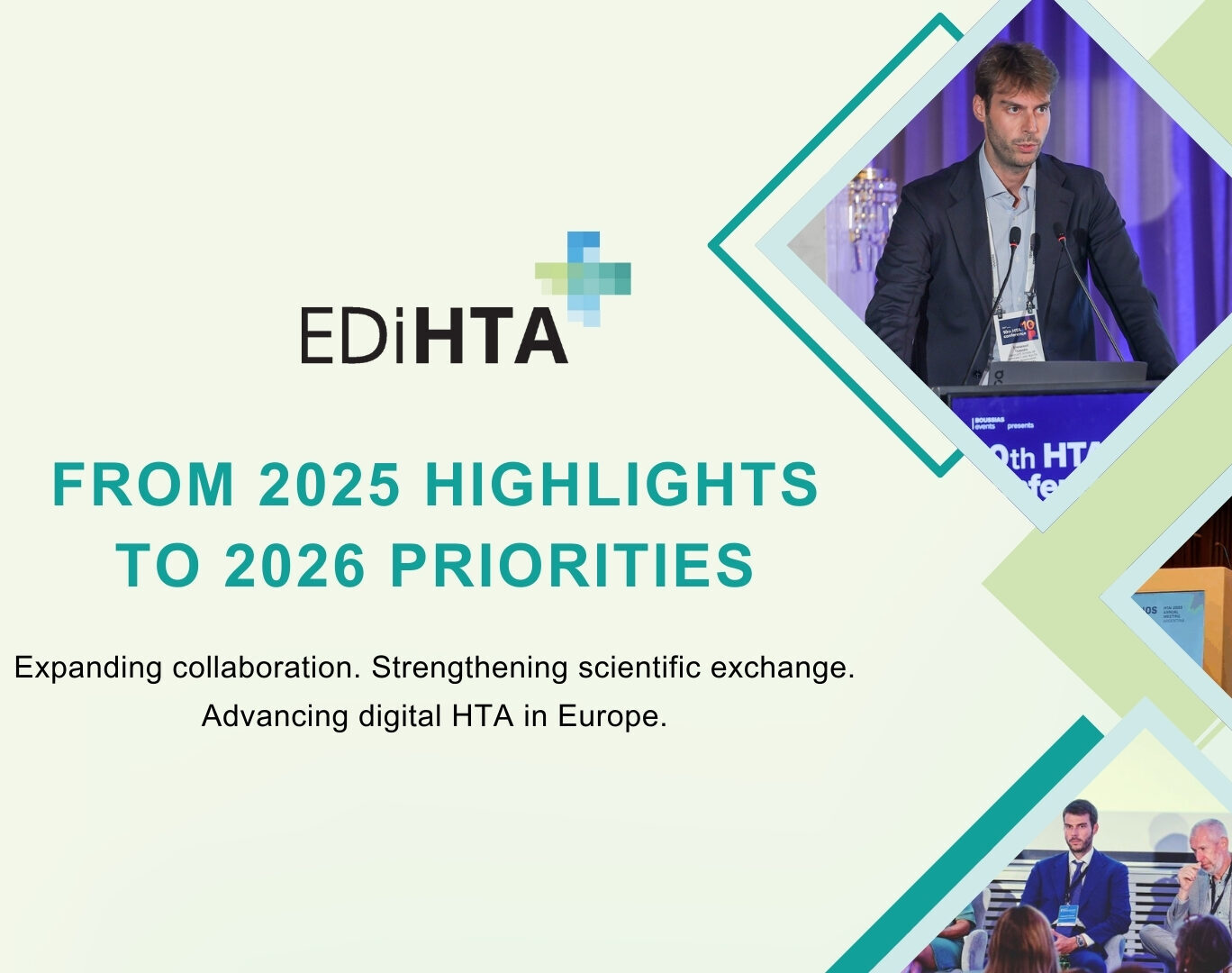
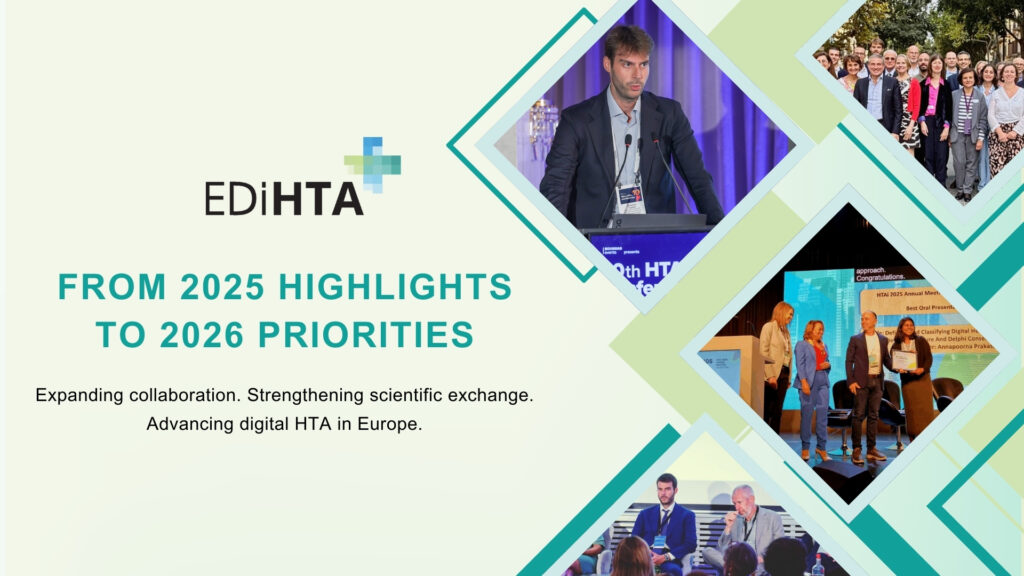
    2025 marked a consolidation phase for EDiHTA, with a strong presence at key scientific, professional and policy-oriented events at the European and international levels. These engagements reinforced the project’s positioning as a reference initiative for the assessment of digital health technologies within the Health Technology Assessment landscape.

    • A major milestone was EDiHTA’s participation in HIMSS 2025, where the project was showcased within the EU Projects White Paper, highlighting the contribution of EU-funded research to the European digital health ecosystem. The consortium acknowledges the excellent organisational support provided by Loida Leonart and Marianna Petrea Imenokhoeva.
    • EDiHTA also had a strong scientific presence at HTAi 2025, contributing through three panel sessions, one pre-conference workshop and two scientific abstracts. One abstract received an award, reflecting the quality and relevance of the work conducted within the project, with recognition to Radboud University Medical Center and Annapoorna Prakash.
    • Further engagement took place at EUPHA 2025, through a dedicated panel session supported by the EUPHA HTA section, chaired by Chiara de Waure, with contributions from Elena Petelos. The session was also supported by the EUPHA Digital Health and Artificial Intelligence sections, including the participation of Vice President Stefan Buttigieg.
    • As a further acknowledgement of its policy relevance, EDiHTA was invited to present at the HTA Conference organised by DG SANTE, as well as at a joint webinar organised by WHO and NICE, focusing on digital health technologies and HTA.

    Looking ahead, 2026 will be a year of strategic growth, building on a solid base of scientific dissemination, expanding the EDiHTA network and further strengthening long-standing collaborations with key partners such as HTAi, EUPHA and HIMSS, in line with the project’s mission to support robust, transparent and policy-relevant assessment of digital health technologies.

  • EDiHTA publishes its second scientific paper on harmonising Digital HTA in Europe

    EDiHTA publishes its second scientific paper on harmonising Digital HTA in Europe

    EDiHTA publishes its second scientific paper on harmonising Digital HTA in Europe

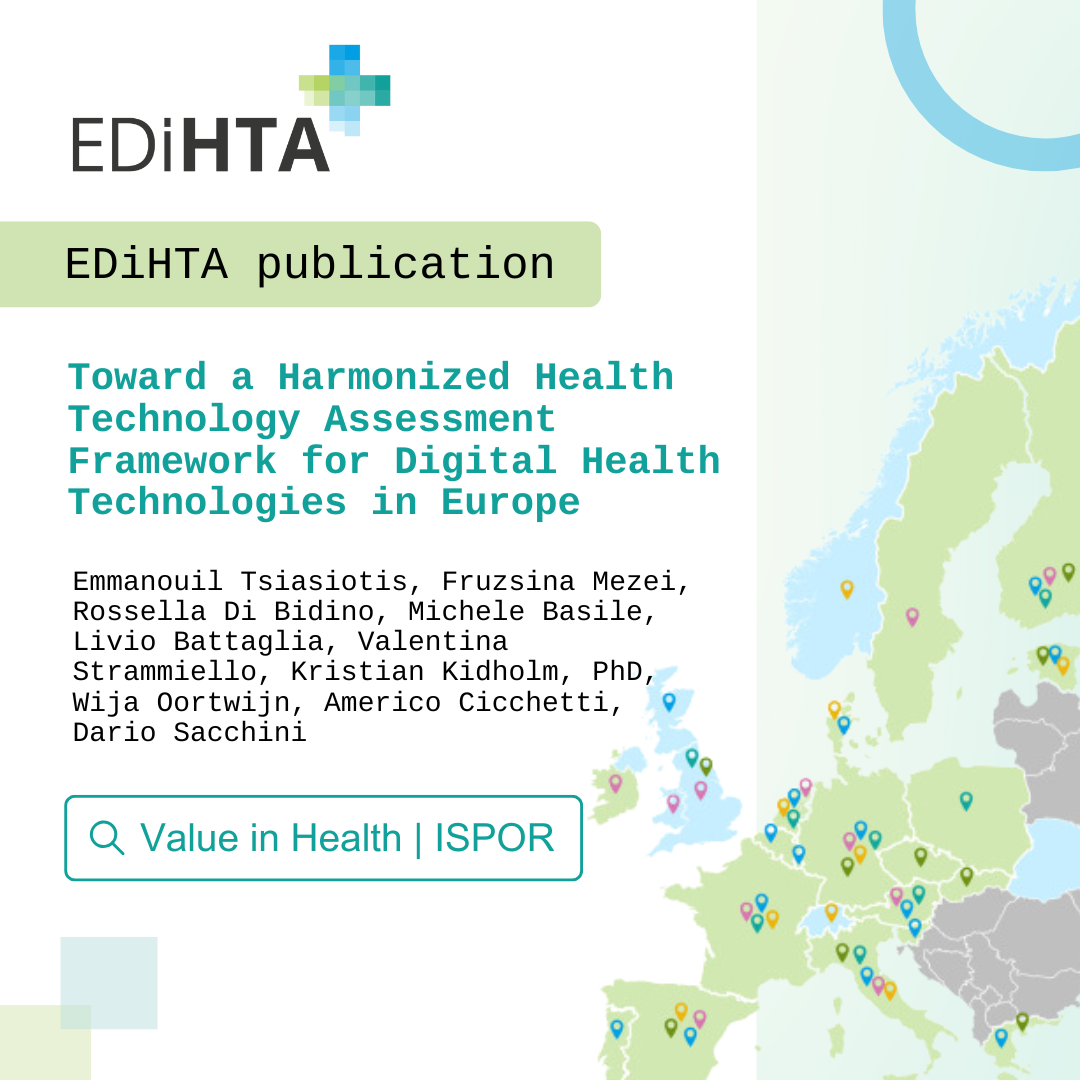
    EDiHTA partners have published a new peer-reviewed scientific article addressing one of the project’s core challenges: the lack of harmonised Health Technology Assessment methods for evaluating digital health technologies across Europe.

    The article, titled “Toward a Harmonized Health Technology Assessment Framework for Digital Health Technologies in Europe,” is authored by Emmanouil Tsiasiotis, Fruzsina Mezei, Rossella Di Bidino, Michele Basile, Livio Battaglia, Valentina Strammiello, Kristian Kidholm, Wija Oortwijn, Americo Cicchetti, Dario Sacchini, and draws directly on research conducted within the  EDiHTA project.

    Read the paper: Value in Health | ISPOR (DOI: https://doi.org/10.1016/j.jval.2025.12.004)

    Abstract

    Objectives

    The increasing use of digital health technologies (DHTs) in Europe presents opportunities and challenges. Although DHTs could enhance care delivery and health outcomes, existing health technology assessment (HTA) methods often lack flexibility to address their diverse, fast-evolving nature. This article explores the perspectives of 5 stakeholder groups—policy makers, HTA agencies, technology developers, healthcare providers, and patients—regarding the development of a harmonized HTA framework for DHTs within the Horizon Europe funded European Digital Health Technology Assessment (EDiHTA) project.

    Methods

    Findings are drawn from mixed-method research, including stakeholder surveys, interviews and focus groups with 97 stakeholders across European countries. The analysis of the data was performed per each stakeholder group through thematic analysis to identify points of consensus before identifying needs and requirements across stakeholders, relevant to the development of EDiHTA, using the Innovation Health Technology Assessment Methods framework.

    Results

    Results from 8 focus groups and more than 45 interviews are presented concentrating on 5 main themes. The emerging themes focus on the need for harmonization of HTA methods related to DHTs, the current characteristics of DHTs that are most highly valued, the importance of multistakeholder collaboration, the principles of a concept design for EDiHTA framework, and the discussion on the most relevant domains and criteria to be considered.

    Conclusions

    Stakeholders agreed that a harmonized HTA framework is needed; however, differences persist regarding timing and flexibility of evaluation, evidence types, and stakeholder involvement. The EDiHTA project will address differences through framework piloting, supported by multistakeholder workshops and expert advisory groups.
  • EDiHTA prepares for its open piloting phase in 2026

    EDiHTA prepares for its open piloting phase in 2026

    EDiHTA prepares for its open piloting phase in 2026

    EDiHTA is preparing for an upcoming piloting phase that will test and refine the project’s framework for the assessment of digital health technologies (DHTs) in Europe.

    An open pilot for developers in early 2026

    In early 2026, the EDiHTA consortium will invite digital health technology developers, including SMEs and larger companies, to participate in an open pilot. Participants will be able to propose their technologies as use cases and provide structured feedback on the framework and supporting materials.

    This piloting phase is designed to:

    • validate the framework’s usability and relevance across different types of DHTs,

    • test the practicality of evidence requirements and assessment steps,

    • strengthen co-creation with industry stakeholders,

    • support refinement of the framework and guidance materials ahead of broader uptake.

    Expressions of interest

    Expressions of interest are expected to open in January 2026. Further information on participation criteria, timelines and submission steps will be shared in the new year.

    Stay connected for updates as EDiHTA moves into this important next phase of framework development.

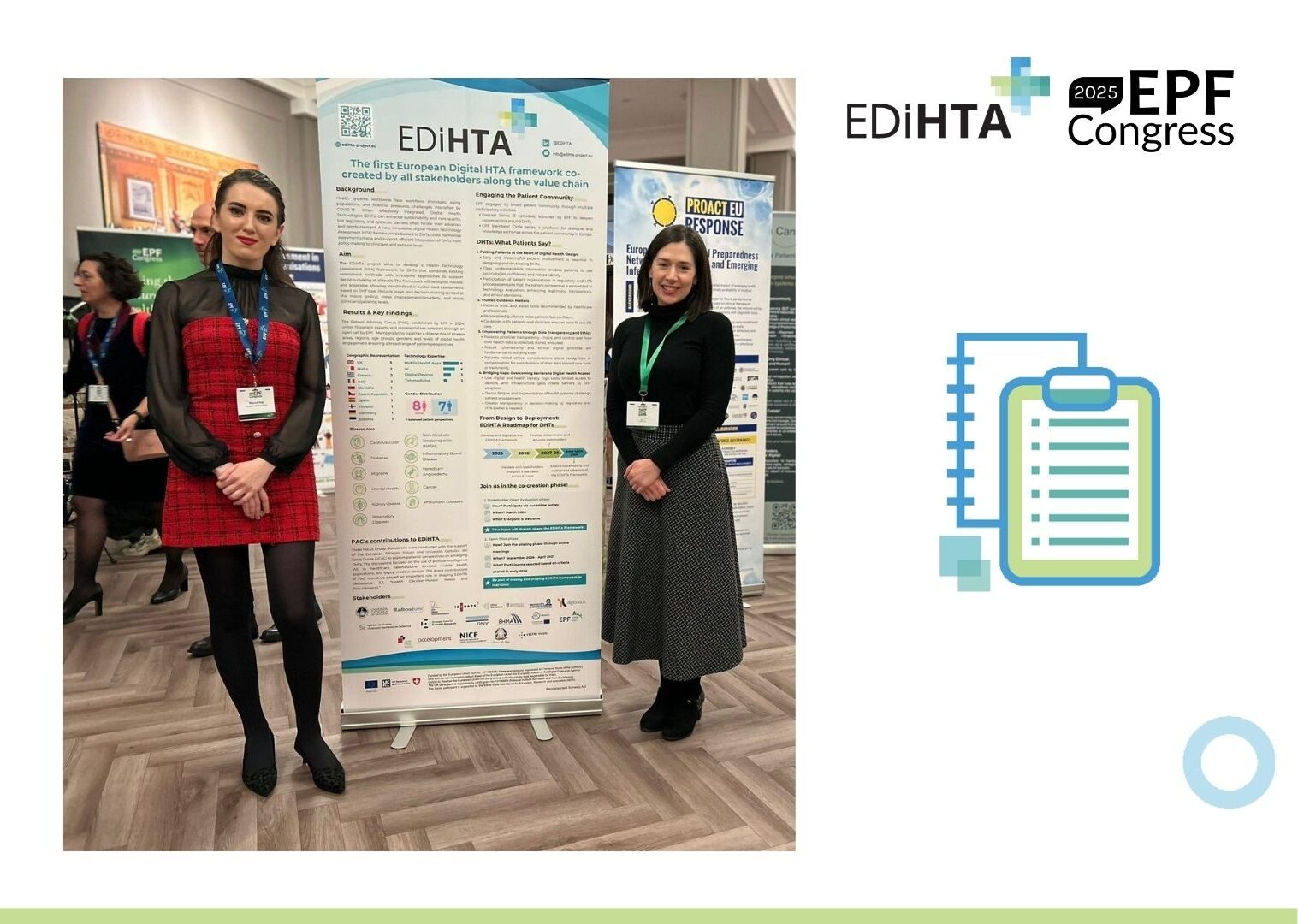
  • Recap: EDiHTA at the EPF Congress 2025: advancing patient involvement in Digital HTA

    Recap: EDiHTA at the EPF Congress 2025: advancing patient involvement in Digital HTA

    Recap: EDiHTA at the EPF Congress 2025: advancing patient involvement in Digital HTA

    The EDiHTA project was represented at the European Patients’ Forum (EPF) Congress, held in Brussels on 26–27 November 2025. Over two days, the Congress focused on strengthening patient involvement in European health systems, with discussions exploring current challenges, emerging priorities and practical approaches to embed patient perspectives in healthcare design and decision-making.

    Bianca Pop, Project Officer at the European Patients’ Forum, highlighted the value of collaboration for patient-centred innovation:

    The EPF Congress brought together patients, policymakers, healthcare professionals, researchers and industry representatives to promote collaboration in shaping Europe’s healthcare future. The exchanges highlighted that joint efforts are essential to ensure healthcare innovations address real patient needs.

    Bianca Pop

    | EPF

    Patient involvement as a core pillar of EDiHTA

    Patient involvement is central to EDiHTA’s approach to developing a European framework for assessing digital health technologies. Through the project’s Patient Advisory Group, patient priorities, lived experiences and real-world use considerations are integrated into the framework development process, helping ensure that assessment approaches reflect what matters to those who will ultimately use and benefit from digital tools in health and care.

    At the Congress, EPF, in partnership with the European Health Management Association (EHMA), presented a poster highlighting how patients contribute to EDiHTA’s work and how patient input supports the project’s goal of advancing more person-centred, trustworthy and usable digital health technologies.

    Reflecting on this contribution, Bianca Pop added:

    As part of the EDiHTA project, the Patient Advisory Group has played a key role, offering insights that guarantee digital health technologies are patient-centred and aligned with day-to-day patient care. We remain committed to advancing these efforts, ensuring the patient perspective is integrated at every stage of the project.

    Bianca Pop

    | EPF

    Alexis Strader, Director of Policy and Research at EHMA, also emphasised the value of the Congress as a forum for exchange across communities working on patient involvement and innovation:

    The Congress provided a valuable opportunity to engage with stakeholders working at the intersection of patient involvement, innovation and healthcare. Discussions confirmed strong interest in approaches that support the responsible use of digital health technologies and patient-centred perspectives.

    Alexis Strader

    | EHMA

    Looking ahead

    Insights and exchanges from the EPF Congress will feed into EDiHTA’s ongoing work, reinforcing the project’s commitment to meaningful patient involvement and supporting efforts to embed patient perspectives consistently across the development of the Digital HTA framework.

  • EDiHTA featured at EU Health Policy Platform Live Webinar on digital health transformation

    EDiHTA featured at EU Health Policy Platform Live Webinar on digital health transformation

    EDiHTA featured at EU Health Policy Platform Live Webinar on digital health transformation

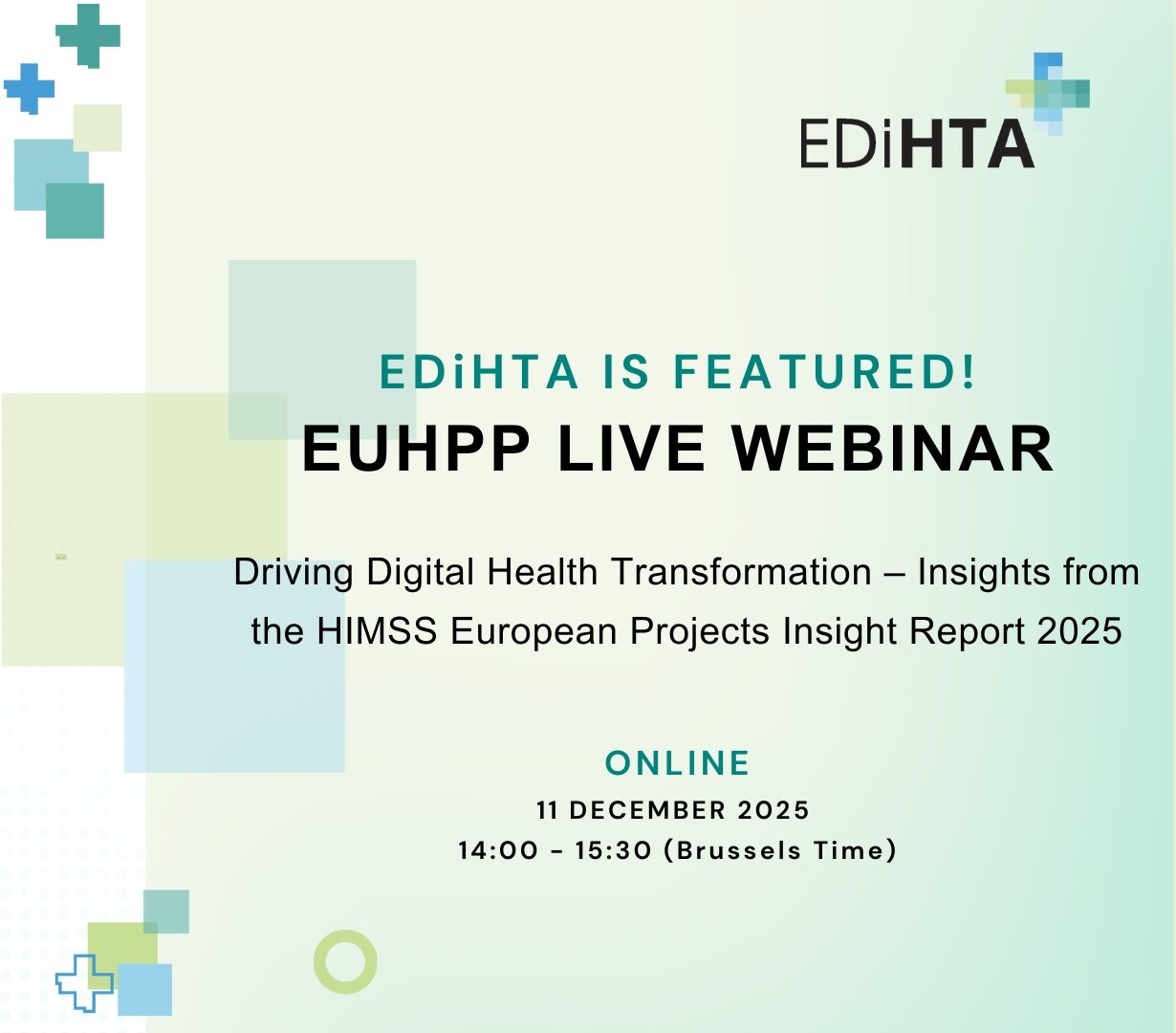
    EDiHTA will be presented at the upcoming EU Health Policy Platform (EUHPP) Live Webinar organised by the European Commission in collaboration with HIMSS: “Driving Digital Health Transformation – Insights from the HIMSS European Projects”. The session takes place on Thursday, 11 December 2025 (14:00–15:30 CET, Brussels time) and will explore how EU-funded initiatives contribute to advancing digital health transformation across Member States.

    EDiHTA will be represented by Emmanoil Tsiasiotis, EDiHTA’s Project Manager, who will present EDiHTA’s work on developing a flexible, stakeholder-driven framework for the assessment of digital health technologies. His contribution will highlight how the project supports more consistent, transparent and inclusive approaches to evaluating digital health solutions across Europe.

    The webinar will also introduce the European Projects Insight Report 2025, prepared through the HIMSS European Projects Initiative. The report brings together twelve EU-funded projects and a multi-stakeholder Advisory Board, distilling more than 160 recommendations aimed at improving coordination across initiatives and supporting long-term sustainability of digital health innovation in Europe.

    We look forward to taking part in this exchange alongside other EU-funded projects and to sharing EDiHTA’s experience with the EUHPP community.

    Useful Links:

    HIMSS, the Healthcare Information and Management Systems Society, is a global non-profit organisation working to advance the use of information and technology in health systems. 

Receive the latest news

Subscribe to our Newsletter

Stay informed about latest EDiHTA results, conferences, and milestones.