Category: Uncategorized

  • EDiHTA at HTAi 2026: partners to present research on digital health technology assessment in Istanbul

    EDiHTA at HTAi 2026: partners to present research on digital health technology assessment in Istanbul

    EDiHTA at HTAi 2026: partners to present research on digital health technology assessment in Istanbul

    The EDiHTA project will be strongly represented at the Health Technology Assessment international (HTAi) 2026 Annual Meeting, taking place in Istanbul from 6 to 10 June 2026.

    Across several oral and poster presentations, EDiHTA partners will share emerging research on how digital health technologies can be assessed in a more systematic, transparent and context-sensitive way. The contributions reflect the breadth of the EDiHTA framework, covering legal and regulatory requirements, safety, patient-related evidence, sociocultural and ethical dimensions, policy alignment and the development of a shared European approach to digital health technology assessment.


    Strengthening legal and regulatory assessment of digital health technologies

    On Monday, 8 June, from 11:45 to 12:45, Per Atle Bakkevoll from the Norwegian Centre for E-health Research will present EDiHTA research on the legal and regulatory dimensions of digital health technology assessment frameworks.

    The study is based on a scoping review and stakeholder survey examining how legal and regulatory aspects are addressed in the assessment of digital health technologies. The findings highlight four key domains: data protection, transparency, accountability and regulatory compliance. Their importance increases with higher technology maturity and more advanced artificial intelligence capabilities. This work contributes to EDiHTA’s efforts to support more robust, transparent and trusted decision-making for digital health technologies across Europe.

    Authors and contributors: Per Atle Bakkevoll, Elisa Salvi, Line Silsand, Kassaye Yitbarek Yigzaw, Line Helen Linstad.

     
    Assessing patient-related evidence in digital HTA

    On Tuesday, 9 June, from 11:00 to 11:30, Annapoorna Prakash from Radboudumc will present the poster “Patient-Related Evidence For Health Technology Assessment Of Digital Health Technologies: A Literature Review And Stakeholder Survey” in Rumeli Hall, Lütfi Kırdar Congress and Exhibition Center (ICEC).

    The research explores how patient-related evidence can be more systematically integrated into the assessment of digital health technologies. Based on a scoping review, the study examines which patient-related aspects are currently measured and how they are assessed. It proposes a streamlined framework of key topics and outcome measures to support more systematic, transparent and patient-centred evaluation.

    Authors and contributors: Annapoorna Prakash, Marcia Tummers, Bianca Pop, Wija Oortwijn.

     
    Aligning digital HTA with European policy priorities

    Also on Tuesday, 9 June, from 11:00 to 11:30, Line Linstad from the Norwegian Centre for E-health Research will present EDiHTA research on how HTA can evolve into a system-shaping tool for digital health technologies.

    The poster examines how European policy priorities, including the European Health Data Space, are shaping the development of a harmonised HTA framework for digital health. Through policy analysis and stakeholder engagement across multiple Member States, the study identifies key themes related to individual rights, technological requirements and human-technology interaction. These insights point to the need for a flexible and standardised approach that can support decision-making at different levels of the health system.

    Authors and contributors: Elisa Salvi, Line Silsand, Karianne Lind, Kassaye Yitbarek Yigzaw, Alexandra Makhlysheva, Rouven Besters, Per Atle Bakkevoll, Kari Dyb, Line Linstad.


    Building a multi-domain European framework for digital HTA

    On Wednesday, 10 June, from 09:00 to 09:45, Joan Segur-Ferrer from the Agència de Qualitat i Avaluació Sanitàries de Catalunya (AQuAS) will present EDiHTA research on the development of a multi-domain framework for assessing digital health technologies.

    The presentation, part of the track “Breakthrough and New Approaches in HTA”, will take place in Rumeli Hall, Lütfi Kırdar Congress and Exhibition Center (ICEC).

    The work outlines a collaborative effort involving multiple European institutions to define the structure and content of the EDiHTA framework. It brings together evidence from extensive literature reviews and stakeholder engagement to establish 13 assessment domains, covering topics, outcomes, methods and evidence requirements. These domains are designed to adapt to different technology characteristics, including maturity level and artificial intelligence capabilities, and to support decision-making across health system levels.

    Authors and contributors: Joan Segur-Ferrer, Enric Rubiella Navarro, Mireia Moreno Lorente, Roland Pastells Peiró, Sandra Ankomako Ankomako, Iga Lipska, Wija Oortwijn, Manos Tsiasiotis, Rosa Maria Vivanco Hidalgo.

     
    Integrating ethical and sociocultural dimensions into HTA

    On Monday, 10 June, from 11:45 to 12:45, Livio Battaglia will present EDiHTA research on how sociocultural and ethical dimensions can be systematically integrated into the assessment of digital health technologies.

    The study is based on a scoping review and an experts’ focus group examining how these dimensions are currently addressed and how they can be structured within an HTA framework. The findings highlight the need to integrate sociocultural and ethical considerations as transversal elements across all stages of assessment, strengthening their systematic inclusion within HTA practices. The abstract has been shortlisted in the category Oral Presentations – Student.

    Authors and contributors: Livio Battaglia, Simona Paone, Marco Marchetti, Costanza Raimondi, Pietro Refolo, Dario Sacchini, Manos Tsiasiotis, Americo Cicchetti.

     
    Advancing safety requirements for digital health technology assessment

    EDiHTA partners will also present the poster “Safety Requirements for a European Digital Health Technology Assessment Framework (EDiHTA): A Scoping Review and Stakeholder Survey”. The poster will be presented by Joan Fibla Reixachs and Sonia Muñoz-López from FCRB-Hospital Clínic de Barcelona / Institut d’Investigacions Biomèdiques August Pi i Sunyer (IDIBAPS).

    The work reflects a collaborative effort across EDiHTA partners, including FCRB-HCB, AQuAS, Uniklinik Frankfurt and the Norwegian Centre for E-health Research. It contributes to ongoing discussions on how to strengthen approaches to evaluating digital health solutions, with a focus on safety and evidence-informed decision-making.

    Authors and contributors: Joan Fibla Reixachs, Sonia Muñoz-López, Joan Segur-Ferrer, Enric Rubiella Navarro, Roland Pastells Peiró, Elina Nürenberg-Goloub, Per Atle Bakkevoll, Adrián Valledor Sánchez, Paula Closa Granados, Marcelo Soto Alarcón, Sandra Ankomako Ankomako, Catalina Jaramillo, Benjamin Friedrichson and Laura Sampietro-Colom.

     
    Contributing to international dialogue on digital HTA

    Together, these contributions show how EDiHTA is advancing a comprehensive framework for digital health technology assessment that reflects the complexity of digital transformation in healthcare. By addressing legal, regulatory, safety, patient-related, ethical, sociocultural and policy dimensions, the project supports more coherent and evidence-informed approaches to digital HTA in Europe and beyond.

    Participation in HTAi 2026 offers an important opportunity for EDiHTA partners to exchange with the international HTA community, share research findings and contribute to discussions on how assessment frameworks can better respond to digital health innovation.

    If you are attending HTAi 2026 in Istanbul, we invite you to connect with EDiHTA partners and learn more about the project’s contributions to the meeting.


     

  • EDiHTA referenced in Dagens Medisin opinion article on digital health governance and HTA

    EDiHTA referenced in Dagens Medisin opinion article on digital health governance and HTA

    EDiHTA referenced in Dagens Medisin opinion article on digital health governance and HTA

    Photo credit: Jarl-Stian Olsen, Norwegian Centre for E-health Research, Dep. Of Communication and Public Relations

    An opinion article published in Dagens Medisin, Norway’s leading independent professional and news outlet for the health and care sector, highlights the need for stronger governance of digital health in Europe and points to Health Technology Assessment (HTA) as a key tool for informed decision-making.

    The article, authored by Line Linstad and Line Silsand, our partners from the Norwegian Centre for E-health Research, references the EDiHTA project in the context of developing approaches that can better support the evaluation of digital health technologies. It argues that while traditional HTA has been developed mainly for medicines and medical devices, digital health solutions, including apps and AI tools, require more adaptive and lifecycle-based assessment methods.

    The article underlines the relevance of EDiHTA’s work towards a digital health technology assessment framework that can support evidence-based, sustainable and patient-centred digital transformation in healthcare. EDiHTA aims to develop and validate a comprehensive framework for evaluating digital health technologies in real healthcare environments.

    Follow this link to read the article in Dagens Medisin.

    The English translation of the article is available below.

    Europe lacks governance of digital health — HTA could be the key

    Europe stands at a crossroads in the digitalisation of healthcare. The experience of the digital COVID certificate demonstrated that secure, cross-border use of health data is both possible and politically feasible when urgency demands it. This gave momentum to the development of the European Health Data Space (EHDS).

    EHDS provides data, but not governance

    The ambition is considerable: to establish a shared European infrastructure for health data that supports treatment, research, and innovation. EHDS is more than a data-sharing project — it is an entirely new knowledge infrastructure for health decisions, regulation, and innovation.

    However, EHDS does not in itself resolve what is perhaps the greatest governance challenge: how should authorities actually prioritise between an ever-growing number of digital solutions, with varying levels of documented effectiveness, rapid development cycles, and significant resource demands?

    HTA as a tool for responsible decision-making

    To realise the full benefits of EHDS, we need tools that can translate data into a sound basis for decisions. This is where Health Technology Assessment (HTA) becomes critical. HTA is a governance tool that gathers and evaluates research-based knowledge as the foundation for strategic and policy decisions. HTA provides systematic assessment of benefit, risk, and value, and can build confidence in which digital health services actually work.

    This evidence base is essential for authorities to determine which technologies should be adopted and which should be phased out of healthcare.

    Technology evolves faster than assessments

    Current HTA frameworks were developed for pharmaceuticals and medical devices — not for digital health services that are data-driven, adaptive, and continuously evolving. How does one assess an app or an AI tool that is updated frequently?

    We need lifecycle-based and adaptive HTA that keeps pace with technological development and the use of real-world data. This is precisely where EHDS could become the enabler of digital health service evaluation, both in Norway and across EU member states.

    New knowledge through the EDiHTA project

    The EU project EDiHTA (European Digital Health Technology Assessment) addresses this challenge directly. The project develops shared European frameworks for how digital health technologies can be assessed throughout their entire lifecycle.

    The Norwegian Centre for E-health Research is an active contributor, with the aim of linking data infrastructure and decision-making processes in a way that genuinely strengthens the scope for political action.

    From knowledge to decision-making power

    This points to a central gap in knowledge: we still know too little about how HTA and data infrastructure can be incorporated into an operational governance tool for authorities. Without such a link, EHDS risks becoming a data platform without clear political direction, and digitalisation a series of isolated initiatives without coherent prioritisation.

    For European decision-makers, this is therefore not simply a matter of technology — it is a matter of governance. Who decides which solutions are to be adopted? On what basis? And how do we ensure that investments in digital health actually deliver better services, more equitable access, and sustainable health systems?

    If Europe is to succeed in the digital transformation of healthcare, HTA must be elevated from a technical instrument to an integral part of political and strategic governance. EHDS provides the data foundation. A modernised, digitally adapted HTA framework provides the decision-making power.

    The link between the two may prove decisive in determining whether Europe takes a leading role in developing a responsible, evidence-based, and sustainable digital health service — or is left with fragmented solutions and weakened governance.

    Fact box:

    EHDS (European Health Data Space) is described by the European Commission as a shared framework for the use and sharing of health data, supporting research, innovation, and policy. HTA is a tool for assessing the medical, economic, social, and ethical dimensions of health technology. The EU’s HTA framework also facilitates joint clinical assessments and more coordinated European collaboration, making the combination of EHDS and HTA particularly relevant in a governance context.


  • EDiHTA workshop at HTAi 2026: closing the gaps in evaluating AI-enabled Digital Health Technologies

    EDiHTA workshop at HTAi 2026: closing the gaps in evaluating AI-enabled Digital Health Technologies

    EDiHTA workshop at HTAi 2026: closing the gaps in evaluating AI-enabled Digital Health Technologies

    How should AI-enabled Digital Health Technologies be evaluated across different health systems, care contexts and countries?

    EDiHTA will contribute to this important discussion at the Health Technology Assessment international (HTAi) 2026 Annual Meeting, taking place from 6 to 10 June 2026 in Istanbul, Türkiye. The HTAi Annual Meeting is a leading international forum for the global Health Technology Assessment community and, in 2026, will focus on the theme “HTA As A System Shaper”, exploring how HTA can support resilient, equitable and sustainable health systems.

    As part of the pre-conference programme, EDiHTA will host an interactive workshop on Saturday, 6 June 2026, bringing together international experts and stakeholders to discuss how AI-enabled Digital Health Technologies intended to diagnose, treat and monitor diseases can be evaluated across different countries and healthcare systems.

    WS07: Closing the gaps in evaluating Digital Health Technologies

    The workshop, titled “Closing the Gaps in Evaluating Digital Health Technologies: Findings from the EDiHTA Project and Global Perspectives”, will build on findings from the EDiHTA project, which is developing a flexible, inclusive and validated European Health Technology Assessment framework for Digital Health Technologies, including telemedicine, mobile health applications and AI-enabled solutions.

    Workshop details

    Date: Saturday, 6 June 2026
    Time: 13:30-17:00, Istanbul local time
    Location: Bahcesehir University, Besiktas South Campus, Ciragan Caddesi Osmanpasa, Mektebi Sokak No: 4-6, 34353 Besiktas, Istanbul
    Session: WS07
    Registration: Participation requires registration via the HTAi 2026 Annual Meeting platform:

    Register here

    A multi-stakeholder discussion on AI-enabled digital health assessment

    AI-enabled Digital Health Technologies are increasingly used to support diagnosis, treatment and disease monitoring. However, their evaluation raises important methodological and implementation questions, particularly when technologies are used across different health systems, regulatory environments, clinical pathways and patient populations.

    The workshop will bring together HTA bodies, hospital-based HTA units, policymakers, clinicians, AI experts, patients, industry representatives and international researchers to examine how evidence requirements, assessment criteria and contextual factors can be addressed in a more consistent and actionable way.

    The first part of the workshop will provide strategic and methodological perspectives from international experts. The second part will actively involve participants in a structured co-creation and consensus-building exercise. Participants will contribute to discussions aimed at:

    • validating the EDiHTA framework;
    • identifying which elements of Digital Health Technology assessment are globally transferable and which are context-specific;
    • discussing evidence requirements for AI-enabled Digital Health Technologies;
    • supporting more consistent, inclusive and practically applicable approaches to digital health assessment.
    Chairs and presenters

    The workshop will feature contributions from:

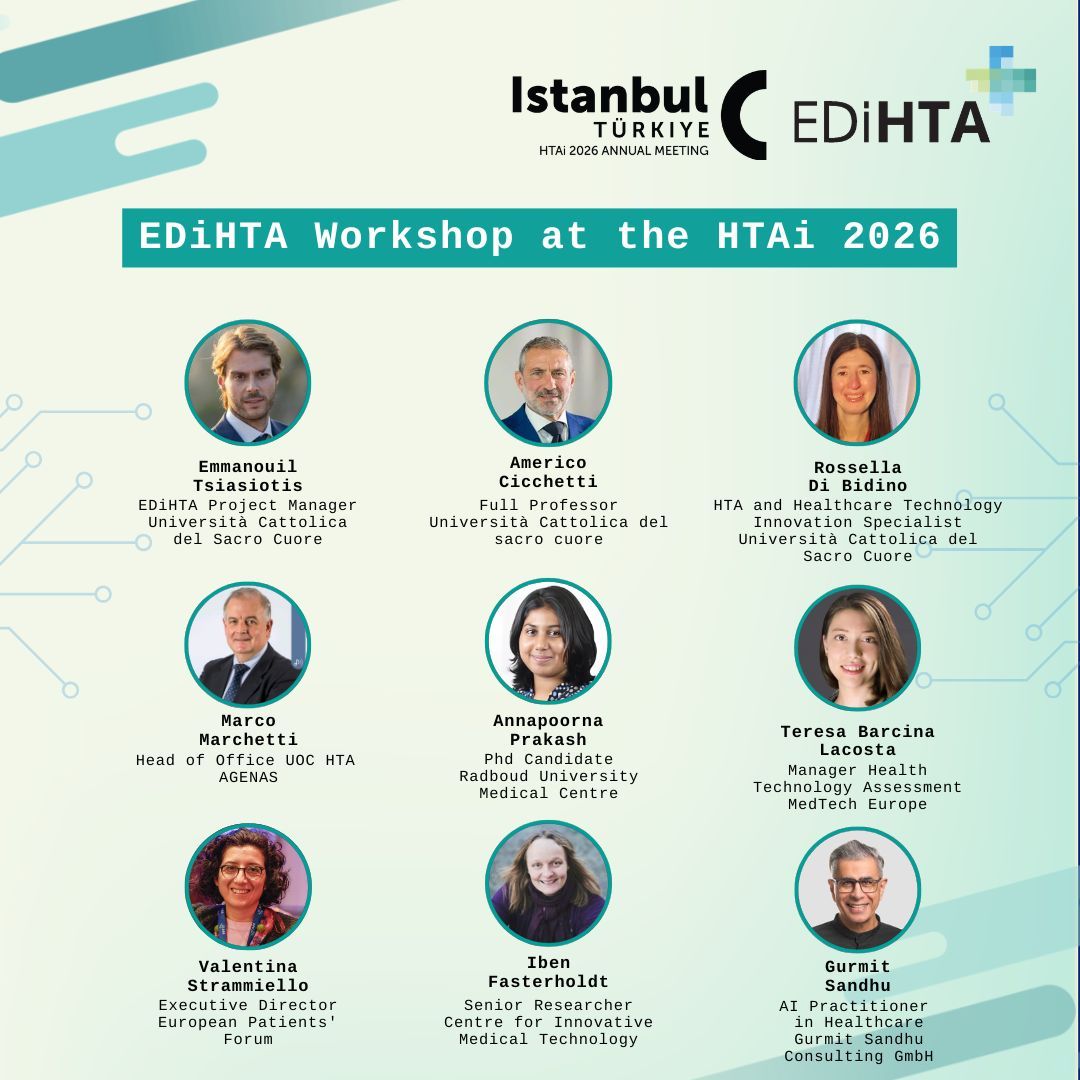
    • Emmanoil Tsiasiotis
    • Americo Cicchetti
    • Rossella Di Bidino
    • Marco Marchetti
    • Annapoorna Prakash
    • Teresa Barcina Lacosta
    • Valentina Strammiello
    • Iben Fasterholdt
    • Gurmit Sandhu

    Together, they will guide discussions on how HTA methods can better respond to the complexity of AI-enabled Digital Health Technologies and support evidence-based decision-making in healthcare innovation.

    Contributing to future approaches for Digital Health Technology assessment

    Through this workshop, EDiHTA aims to support international dialogue on how Digital Health Technologies can be evaluated in ways that are scientifically robust, patient-centred and adaptable to different healthcare settings. This aligns with the project’s broader goal of developing common methods for assessing Digital Health Technologies and supporting value-based decision-making across Europe.

    Stakeholders interested in Health Technology Assessment, AI, digital health, evidence generation and healthcare innovation are warmly invited to join the workshop and contribute to shaping future approaches for the evaluation of AI-enabled Digital Health Technologies worldwide.

    Learn more about the HTAi 2026 Annual Meeting: HTAi 2026 Annual Meeting
    Learn more about Register for the workshop: Registration link

  • EDiHTA at HTAi 2026: Contributing to Advancing Digital Health Assessment in Europe

    EDiHTA at HTAi 2026: Contributing to Advancing Digital Health Assessment in Europe

    EDiHTA at HTAi 2026: Contributing to Advancing Digital Health Assessment in Europe

    EDiHTA will contribute to the HTAi 2026 Annual Meeting, taking place from 6 to 10 June 2026 in Istanbul! EDiHTA is also supporting the event as a Diamond Sponsor.

    The HTAi Annual Meeting is a leading international forum bringing together the global Health Technology Assessment community. The 2026 edition, held under the theme ‘HTA As A System Shaper’, focuses on the evolving role of HTA in supporting resilient, equitable, and sustainable health systems.

    In this context, EDiHTA partners will present a range of research outputs addressing the assessment of digital health technologies and contributing to ongoing discussions on methodological development, policy alignment, and system transformation.

    OVERVIEW OF EDiHTA SESSIONS

    EDiHTA will be represented through a series of contributions across the conference, reflecting the project’s collaborative work on advancing digital health technology assessment in Europe.

    Pre-conference workshop

    • WS07 – Closing The Gaps In Evaluating Digital Health Technologies: Findings From The EDiHTA Project And Global Perspectives
    • Facilitators: Emmanouil Tsiasiotis, Teresa Barcina Lacosta, Valentina Stramiello
    • This workshop will examine how gaps in evaluating digital health technologies can be addressed through more harmonised approaches. It will engage participants in identifying practical tools and strategies to support lifecycle-based assessment and strengthen stakeholder collaboration.

    Panel session

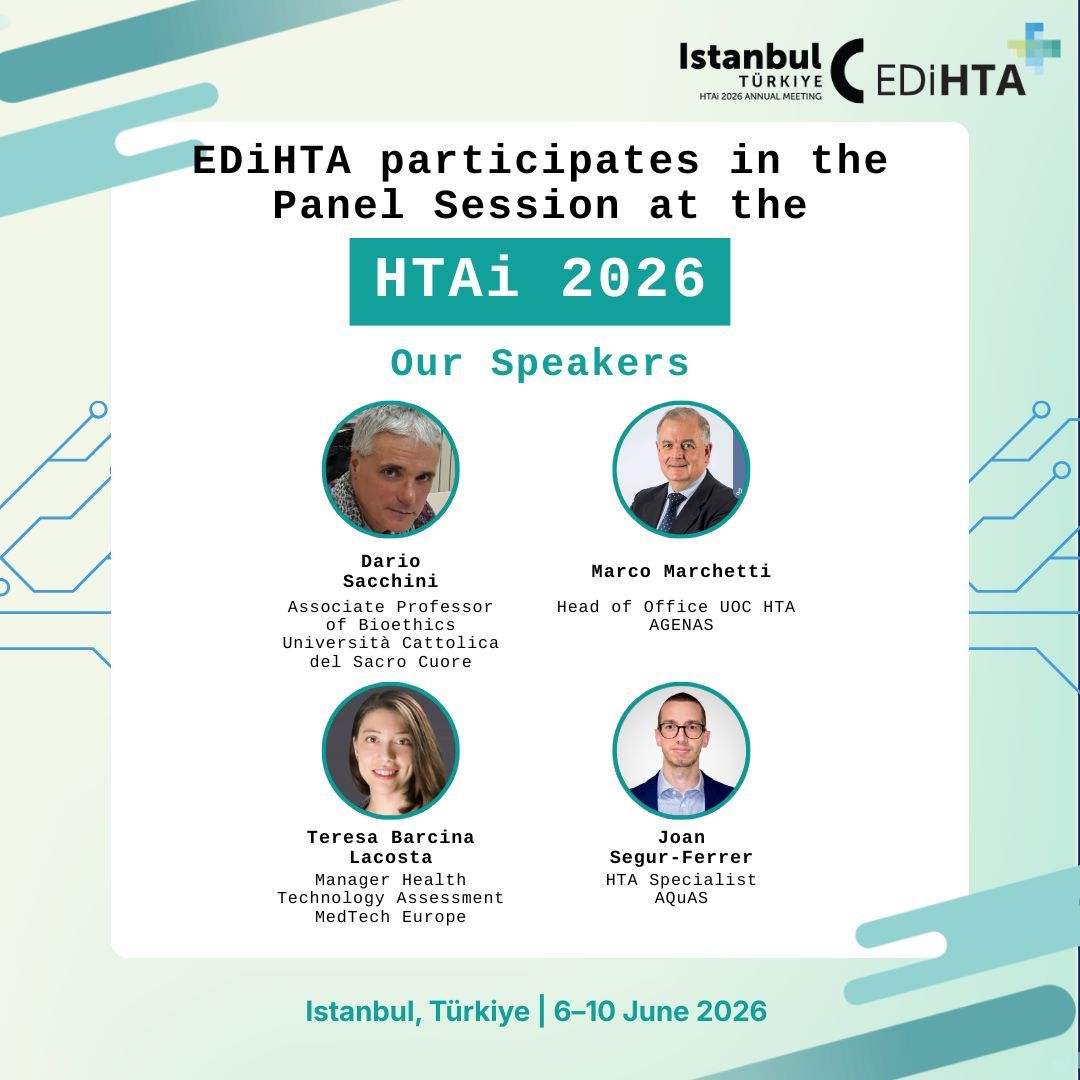
    • PN16 – The Role Of HTA In Driving The Digital Health Transition In Europe. The Case Of The EDiHTA Project
    • Contributors: D. Sacchini, M. Marchetti, J. Segur-Ferrer, T. Barcina-Lacosta
    • This panel will explore how HTA can support the integration of digital health technologies into healthcare systems, with a focus on its role in informing policy and guiding decision making.

    Oral presentations

    1. Legal And Regulatory Domain In The European Digital Health Technology Assessment Framework (EDiHTA): Scoping Review And Online Survey 
      Monday, 8 June 2026, 11:45–12:45
    • Presenter: Per Atle Bakkevoll
    • This presentation explores how legal and regulatory considerations can be systematically integrated into the assessment of digital health technologies, with a focus on key domains such as data protection, transparency, accountability, and compliance.
    1. Developing A European Digital Health Technology Assessment (EDiHTA) Framework: Defining Domains Through a Multi-Institutional Collaborative Effort
      Wednesday, 10 June 2026, 09:00–09:45
    • Presenter: Joan Segur-Ferrer
    • This research presents the development of a multi-domain framework for digital health technology assessment, outlining the definition of 13 domains to support structured and context-sensitive evaluation.
    1. Sociocultural And Ethical Domains For A European DHT Assessment Framework (EDiHTA): A Scoping Review And Experts’ Focus Group
      Monday, 10 June 2026, 11:45–12:45
    • Presenter: Livio Battaglia
    • This presentation focuses on integrating sociocultural and ethical dimensions into HTA, highlighting key themes such as equity, accessibility, transparency, and user autonomy.

    Poster presentations

    1. HTA As A System Shaper: Building A Harmonized Framework For European Digital Health Technologies Assessment (EDiHTA)
      Tuesday, 9 June 2026, 11:00–11:30
    • Presenter: Line Linstad
    • This poster explores how HTA can support system-level decision making in digital health, highlighting the role of policy alignment and stakeholder engagement in shaping a harmonised framework.
    1. Patient-Related Evidence For Health Technology Assessment Of Digital Health Technologies: A Literature Review And Stakeholder Survey
      Tuesday, 9 June 2026, 11:00–11:30
    • Presenter: Annapoorna Prakash
    • This poster examines how patient-related aspects are currently assessed in digital health technologies and proposes a streamlined framework to support more systematic and patient-centred evaluation.
    1. Evidence requirements on safety aspects for a European Digital ​Health Technology Assessment Framework (EDiHTA): A Scoping Review and Stakeholder Survey​
      Wednesday, June 10, 2026, 11:15 – 11:35
    • Presenter: Joan Fibla
    • This poster examines digital health technologies’ safety assessment criteria and proposes a structured set of topics and subtopics for its appropriate and comprehensive assessment

    Through its participation at HTAi 2026, EDiHTA contributes to advancing the assessment of digital health technologies by promoting methodological development, stakeholder engagement, and alignment with evolving European policy frameworks, supporting more consistent, transparent, and evidence-based approaches to HTA and enabling health systems to respond effectively to the opportunities and challenges of digital transformation. Follow EDiHTA channels for updates and insights from the conference.

    Stay tuned for dedicated posts highlighting each session and speaker in more detail!

  • EDiHTA publication recognised as Editor’s Choice in Value in Health

    EDiHTA publication recognised as Editor’s Choice in Value in Health

    EDiHTA publication recognised as Editor’s Choice in Value in Health

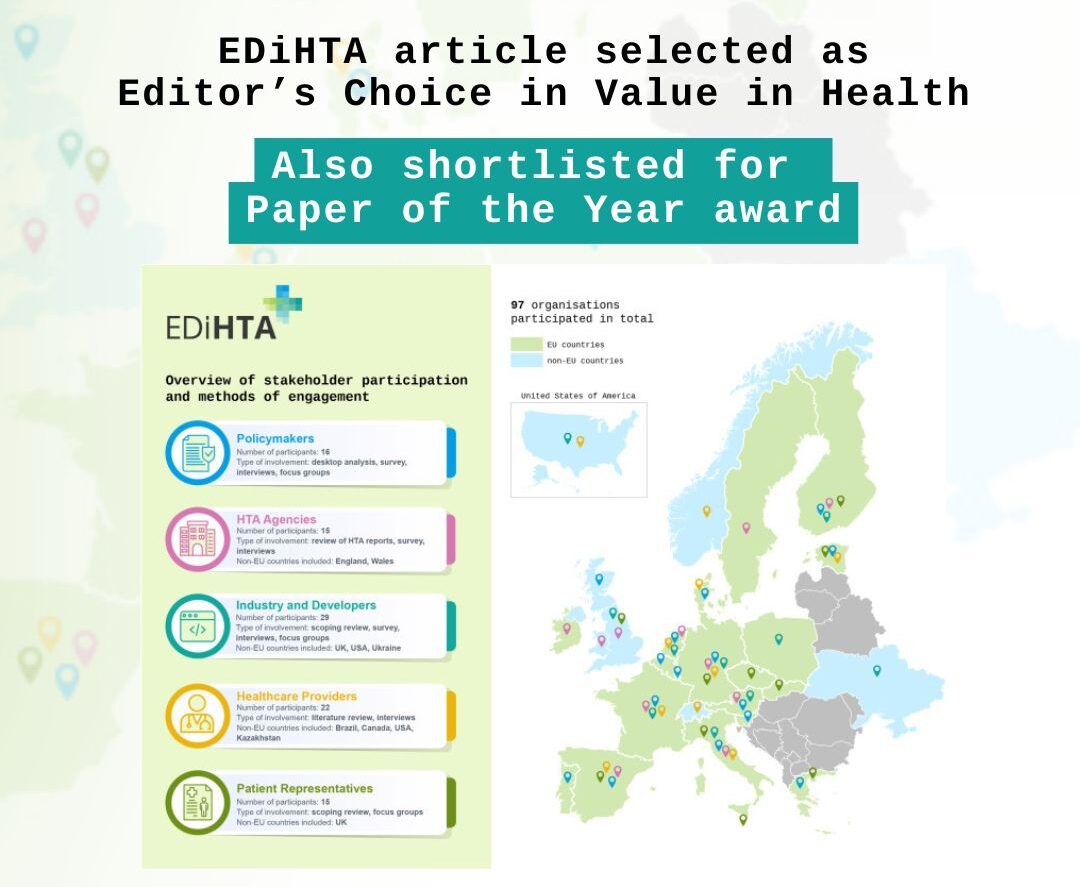
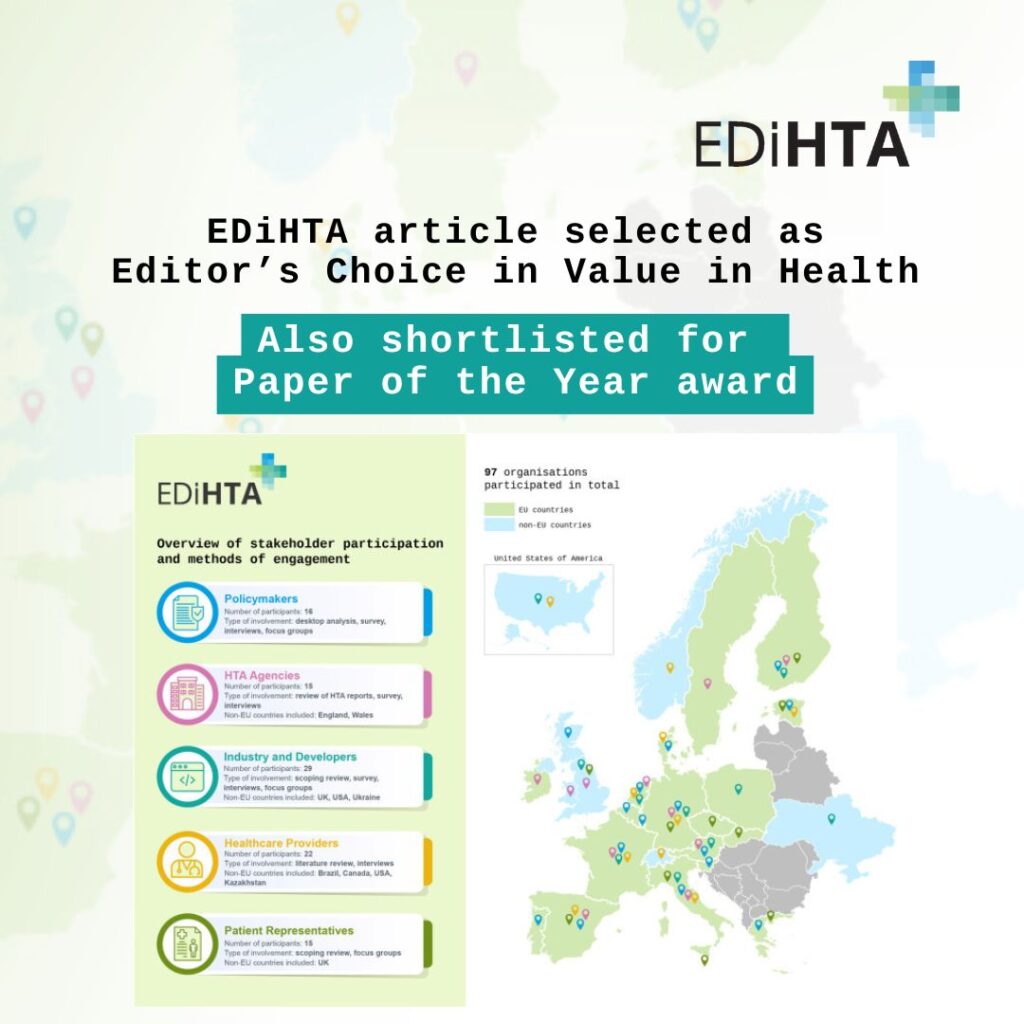
    We are pleased to share that the EDiHTA publication titled “Towards a harmonised Health Technology Assessment framework for Digital Health Technologies in Europe” has been selected as an Editor’s Choice paper in the April 2026 issue of Value in Health, the official journal of ISPOR. This recognition highlights the relevance and quality of the work developed within the EDiHTA project, which addresses one of the key challenges in European healthcare systems: the need for a more coordinated, transparent and adaptable approach to assessing digital health technologies (DHTs).

    Advancing harmonisation in digital health assessment

    DHTs are evolving rapidly, offering new opportunities for improving patient care, system efficiency and health outcomes. However, their assessment remains fragmented across Europe, with varying methodologies, criteria and levels of maturity across Member States.

    The EDiHTA publication responds to this challenge by proposing a harmonised HTA framework tailored to digital health, developed through a multi-stakeholder approach. The work brings together perspectives from:

    • Policymakers
    • Health Technology Assessment bodies
    • Industry representatives
    • Healthcare providers
    • Patient organisations

    By integrating these viewpoints, the framework aims to support more consistent and flexible evaluation processes, while accommodating the specific characteristics of digital solutions, such as rapid innovation cycles and data-driven functionalities.

    Recognition within the scientific community

    Being selected as an Editor’s Choice paper places the publication among a small number of articles recognised by the journal’s editorial board for their scientific quality, relevance and potential impact. The article is also now under consideration for the journal’s annual Paper of the Year award, further underlining its significance within the field of health technology assessment. This achievement reflects the collaborative efforts of the EDiHTA consortium and contributing experts:

    • Emmanouil Tsiasiotis (Università Cattolica del Sacro Cuore / ALTEMS)
    • Fruzsina Mezei (Università Cattolica del Sacro Cuore)
    • Rossella Di Bidino (Università Cattolica del Sacro Cuore)
    • Michele Basile (Università Cattolica del Sacro Cuore)
    • Livio Battaglia (AGENAS)
    • Valentina Strammiello (European Patients’ Forum)
    • Kristian Kidholm (Odense University Hospital)
    • Wija Oortwijn (Radboud University Medical Center)
    • Americo Cicchetti (Università Cattolica del Sacro Cuore / AGENAS)
    • Dario Sacchini (Università Cattolica del Sacro Cuore)

    Looking ahead

    This recognition reinforces the importance of continued collaboration across sectors to advance evidence-based and transparent approaches to digital health assessment in Europe. The EDiHTA project will continue to build on these results, supporting dialogue between stakeholders and contributing to the development of more aligned and effective HTA practices.

  • EDiHTA Talks #3: Building Trust in Digital Medical Devices

    EDiHTA Talks #3: Building Trust in Digital Medical Devices

    EDiHTA Talks #3: Building Trust in Digital Medical Devices

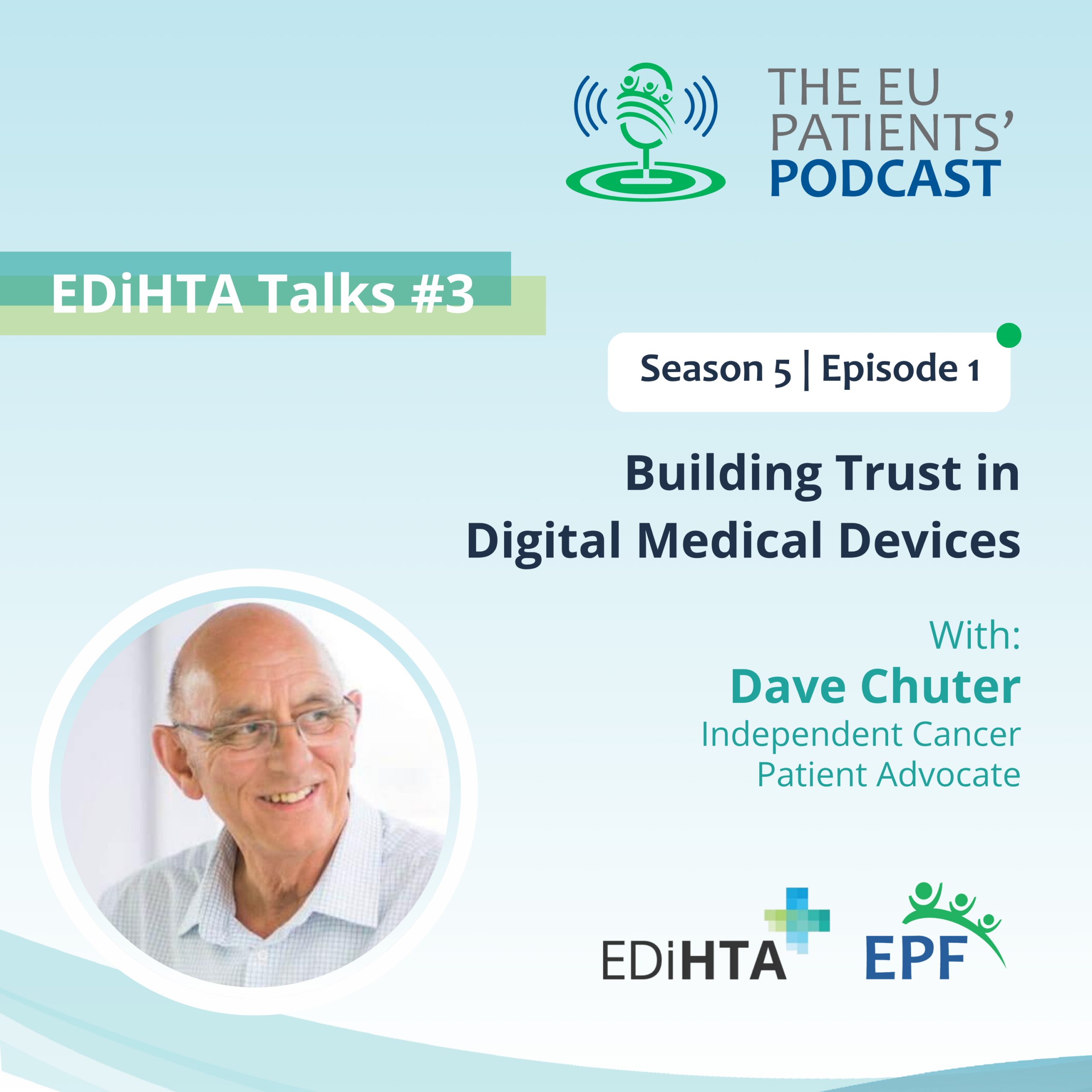
    European Patients’ Forum, in collaboration with EDiHTA, has just published the final episode of the EDiHTA mini-series on the EU Patients’ Podcast, focusing on digital medical devices and their growing role in shaping healthcare across Europe.

    From remote monitoring tools to connected devices, these technologies offer real opportunities for more personalised care and greater patient autonomy. At the same time, they raise critical questions:

    • How do we ensure safety and effectiveness?
    • What builds (or undermines) patient trust?
    • How can patients help shape how these technologies are assessed?

    In this episode, host Flavia Topan (European Patients’ Forum) is joined by Dave Chuter, patient advocate and member of the EDiHTA Patient Advisory Group. Together, they explore key issues such as patient safety, trust, data protection, and the essential role of patients in Health Technology Assessment.

    As the EDiHTA project works towards a more flexible, inclusive and patient-centred framework for evaluating digital health technologies, these conversations are key to ensuring that innovation remains both meaningful and trustworthy.

    We would like to warmly thank the European Patients’ Forum (EPF) and Dave Chuter for their valuable contributions and insights in this episode.

    Click below to listen to the podcast. 

  • EDiHTA Open Call webinar: recording and slides available

    EDiHTA Open Call webinar: recording and slides available

    EDiHTA Open Call webinar: recording and slides available

    The EDiHTA team successfully held its webinar on 12 March 2026, presenting the EDiHTA Open Call for digital health technology developers and manufacturers. The session introduced the objectives of the Open Call and provided guidance on the application and piloting process, followed by a live Q&A with participants.

    If you were unable to attend, the webinar recording and presentation slides are now available.

    DHT developers and manufacturers interested in validating their technology within the first pan-European Digital Health Technology Assessment framework are encouraged to apply to the Open Call.

    Application deadline: 20 March 2026, 16:00 CEST

    Access the recording, slides, and application documents on the EDiHTA Open Call page:

  • Bridging Policy to Practice: What comes next for HTA, EHDS and Digital Health in Europe?

    Bridging Policy to Practice: What comes next for HTA, EHDS and Digital Health in Europe?

    Bridging Policy to Practice: What comes next for HTA, EHDS and Digital Health in Europe?

    With the EU Health Technology Assessment Regulation (HTAR) now in its implementation phase and the European Health Data Space (EHDS) Regulation formally adopted and entering its transition phase, attention is rapidly shifting from legislative ambition to practical implementation. While the HTAR focuses on assessing at the EU level the clinical aspects of new health technologies, the EHDS aims to transform how data for those assessments will be accessed and used. Together, these initiatives signal a fundamental recalibration of how Europe evaluates, adopts and monitors health technologies. Yet their real impact will depend on how effectively Member States, regulators, industry, policymakers, patients and the other end-users translate this framework into day-to-day practice.

    On 13 January, one year after the start of the implementation phase of the HTAR, the European Patients’ Forum hosted a webinar to showcase the work carried out in 2025 to ensure meaningful patient involvement from the very start of implementation. The EU-funded European Digital Health Technology Assessment (EDiHTA) project was also featured, showcasing how it actively integrates patient perspectives into its framework, with a strong emphasis on relevance, fairness, and accessibility for patients.

    The webinar highlighted several key messages from speakers representing patient organisations, individual patient advocates, and the European Commission:

    • Patient involvement in the HTAR process was achieved gradually, through the persistent efforts of patient organisations, which, through concrete cases and practical examples, clearly demonstrated the added value of their engagement.
    • Patient involvement is essential to ensure that the HTAR meets its objectives and responds to patients’ needs, notably improving access to treatments across Europe and supporting greater harmonisation of HTA among EU Member States.
    • Patients and patient organisations play a crucial role in the HTAR process, as they are best positioned to provide real-world insights into what works in practice under this new EU framework and to highlight areas where improvements can still be made.
    • Further steps must be considered, including tackling language barriers, ensuring that patients and patient organisations are appropriately involved, clarifying rules on conflicts of interest, and strengthening training opportunities. These efforts are needed not only to support meaningful patient involvement, but also to ensure that HTAR and HTA are better understood by a wider range of patients and that participation does not rely on the same individuals.

    Reflecting on progress over the past year, following the start of the implementation phase for the HTAR and as EHDS moves through its transitional phase, significant strides have been made, yet careful attention is needed as the EU moves from legislative groundwork to operational implementation.

    Within this evolving landscape, EDiHTA sits at the intersection of the HTA Regulation and the EHDS, aiming to establish a dedicated framework for evaluating digital health technologies, one of the most complex frontiers in health technology assessment. The dynamic, iterative development of digital health technologies, their reliance on real-world performance, and their frequent updates present challenges that traditional HTA methodologies are not well equipped to address.

    In response to these challenges, EDiHTA illustrates how tailored methodologies for digital health technologies can bridge this gap between rapid technological evolution and rigorous assessment standards. Success will require continuous collaboration among key stakeholders, a commitment to learning from early implementation experiences, and ensuring that digital health technologies are evaluated in ways that truly enhance patient access and outcomes across Europe.


    This article was prepared by our partners from European Patients’ Forum.

  • Webinar: EDiHTA Open Call for DHT Developers/Manufacturers

    Webinar: EDiHTA Open Call for DHT Developers/Manufacturers

    Webinar: EDiHTA Open Call for DHT Developers/Manufacturers

    The EDiHTA consortium invites digital health technology (DHT) developers and manufacturers to join an upcoming webinar dedicated to the EDiHTA Open Call, currently open for applications. This session will provide detailed information about the Open Call, including eligibility criteria, timelines, and the piloting process and will offer participants the opportunity to ask questions directly to the EDiHTA team.

    Agenda (60 minutes)

    5 min – Introduction to EDiHTA and the Open Call

    20 min – Presentation of the Open Call: objectives, eligibility, selection process and pilot structure

    35 min – Live Q&A session

    Participants will have the opportunity to clarify application requirements and better understand how their DHT could be assessed within the first pan-European Digital Health Technology Assessment framework. Any remaining questions following the webinar can be addressed directly to the consortium via email info@edihta-project.eu.

    Speakers

    • Emmanouil Tsiasiotis, EDiHTA Project Manager (UCSC)
    • Fruzsina Mezei, Health Economist & Health Policy Expert (UCSC)
    • Adam Lukacs, Senior Manager New Opportunities (EIT Health)

    About the Open Call

    EDiHTA has launched an Open Call for DHT developers/manufacturers to validate the first pan-European Digital Health Technology Assessment framework. Two DHT use cases will be selected for a structured piloting phase to evaluate the EDiHTA toolkit in a real-world setting. Selected DHTs will be assessed by leading European HTA agencies:

    • AQuAS (Spain)
    • FinCCHTA (Finland)

    This non-funded opportunity provides:

    • Early access to the EDiHTA platform
    • Specialised training
    • Direct feedback on future HTA requirements
    • Engagement with payers, patients and decision-makers

    Application deadline: 20 March 2026, 16:00 CEST
    Pilot duration: July 2026 – April 2027

    Register Now

    Interested DHT developers and manufacturers are encouraged to register for the webinar and submit their questions in advance. For full Open Call details and application documents, please visit the Open Call page:

  • Stakeholders from across Europe refine the first draft of the EDiHTA Framework at the co-Creation workshop in Brussels

    Stakeholders from across Europe refine the first draft of the EDiHTA Framework at the co-Creation workshop in Brussels

    Stakeholders from across Europe refine the first draft of the EDiHTA Framework at the co-Creation workshop in Brussels

    On 16–17 February, the EDiHTA Co-Creation and Evaluation Workshop brought together 50 key stakeholders in Brussels for two days of structured dialogue and validation. Organised by Odense University Hospital with the support of Università Cattolica del Sacro Cuore, the meeting gathered representatives from 18 EU Member States, plus the UK and Norway, including national policymakers, payers, HTA agencies, industry leaders, clinicians, hospital managers, patients and patient representatives.
     
    The objective was clear: to validate and further refine the first draft of the EDiHTA framework. The message that emerged from the discussions was both encouraging and constructive. The EDiHTA consortium has succeeded in developing a comprehensive framework capable of capturing the full value of Digital Health Technologies (DHTs) across their lifecycle. Stakeholders recognised its robustness and strategic relevance.
    At the same time, the workshop confirmed the importance of continued refinement to ensure:
    • Higher levels of uptake across different national contexts
    • Adaptability to diverse end users
    • Operational feasibility within existing HTA and reimbursement ecosystems
    The co-creation process remains central to EDiHTA’s methodology. As a next step, the consortium will launch a pan-European survey to broaden stakeholder engagement across the full EU ecosystem and further strengthen the framework.
     
    It was also particularly valuable to welcome Marco Marsella on the first day, who received an early update on progress and stakeholders’ reactions. Continued dialogue with the European Commission is essential for long-term sustainability, and we appreciate the recognition of the important work being carried forward by the EDiHTA consortium.
     
    A special acknowledgement to all EDiHTA partners who actively supported the discussions, and to the external stakeholders for their openness, expertise and collaborative spirit.  The journey towards structured, lifecycle-based evaluation of digital health technologies in Europe continues — grounded in collaboration, methodological rigor, and shared responsibility.
Receive the latest news

Subscribe to our Newsletter

Stay informed about latest EDiHTA results, conferences, and milestones.